
Strength Training for Beginners
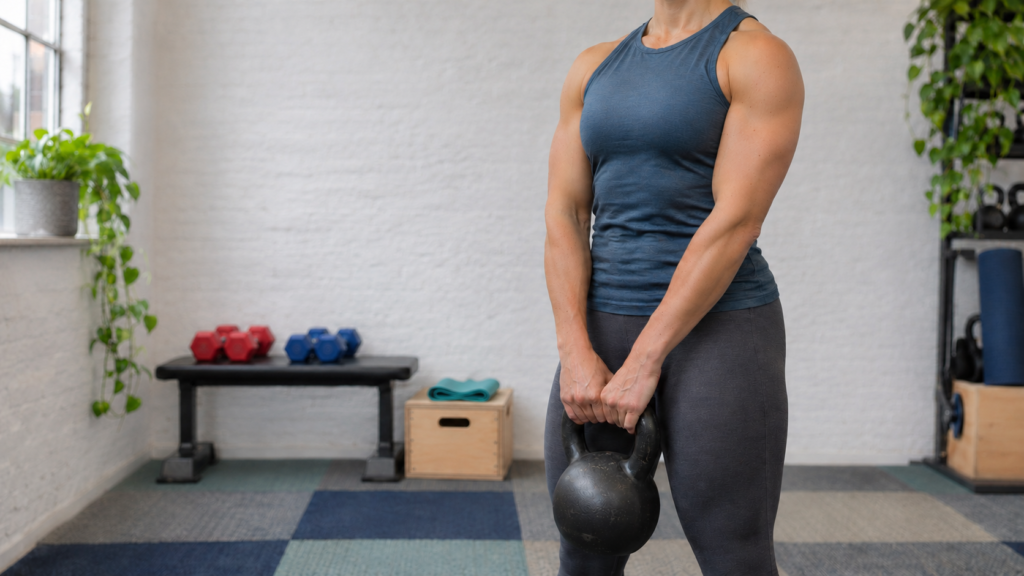
Starting anything new can balance between intimidating and exciting. It is easier to do the things in life, we already know. However, we do reach a point, in whatever it is, when the knowledge and power in that area will peak. Strength training for beginners can include a broader range of age and fitness levels than most people believe. A marathon runner may be new to upper body work, while a person who can lift heavy weights, with their arms, might have little experience with leg work. Anyone, at any age, fitness level, and physical ability can get stronger. The key is to find the approach that works for you.
Getting comfortable before you start
First thing is to be as comfortable as you can be. Working out is work. Which means there should be some struggle or there will not be results. But it is not meant to be torture. Start with the basics; your clothes. Find what you’re comfortable moving in. Squat (sit-stand), reach your hands over your head, and twist back and forth to test how your clothes will move. Shoes should not have a lift unless they are orthopaedic. If hair is long, it should be comfortably and securely placed out of the way and jewellery should not dangle far from the body, as not to get caught on equipment. Also, always be sure that you have a water source. Bring it or check that it is available to you where you will be training. I cannot stress this enough. Once these details are taken care of your focus can be on the activity at hand; Your Strength Training Plan.
Your strength training plan for beginners
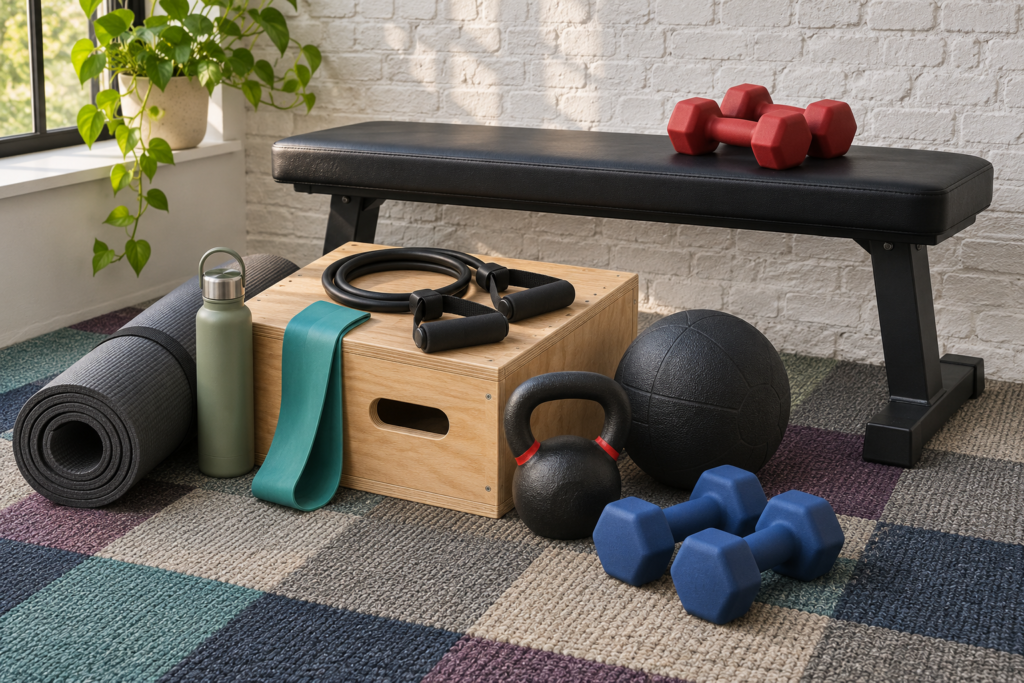
To “Strength Train” is to push past a current ability consistently enough to increase the baseline. This can apply to strength of mind as well as muscles. Muscle Strength Training is to work against an external resistance. You can do this using body weight, free weights, resistance bands, or weight machines AKA fixed weight. Body weight and resistance bands mean you can begin strength training at home with little or no equipment. Starting with 2-3 times per week at a weight and repetition (number of times each move is done) that sufficiently challenges the muscles. What this means is going past a weight you’re comfortable lifting, without feeling strain, pain, or hitting fatigue before 8-10 repetitions. If you don’t give yourself enough of a challenge you will miss out on results. However, if you push too hard, you risk the chance of injury or muscles being unable to do it again on your next workout. Be patient with yourself and kind to your body. Understanding your body, knowing your strengths, weaknesses, and specific goals will help in building your plan.
Warm up, then learn the 5 basic movement patterns
Always start with a warmup. This will get your body ready for the workout to come. A warmup can include the treadmill, stationary bike, cross-trainer, etc. It can also be done with a brisk walk, light run, stair climb, or stationary moves such as jumping jacks (AKA stars), jogging in place, or dynamic stretches. The purpose of a warmup is to get your heart pumping a bit more to move blood throughout your body from fingertips to toes. This warms your muscles and joints, prepping them for movement, helping to avoid injury or strain.
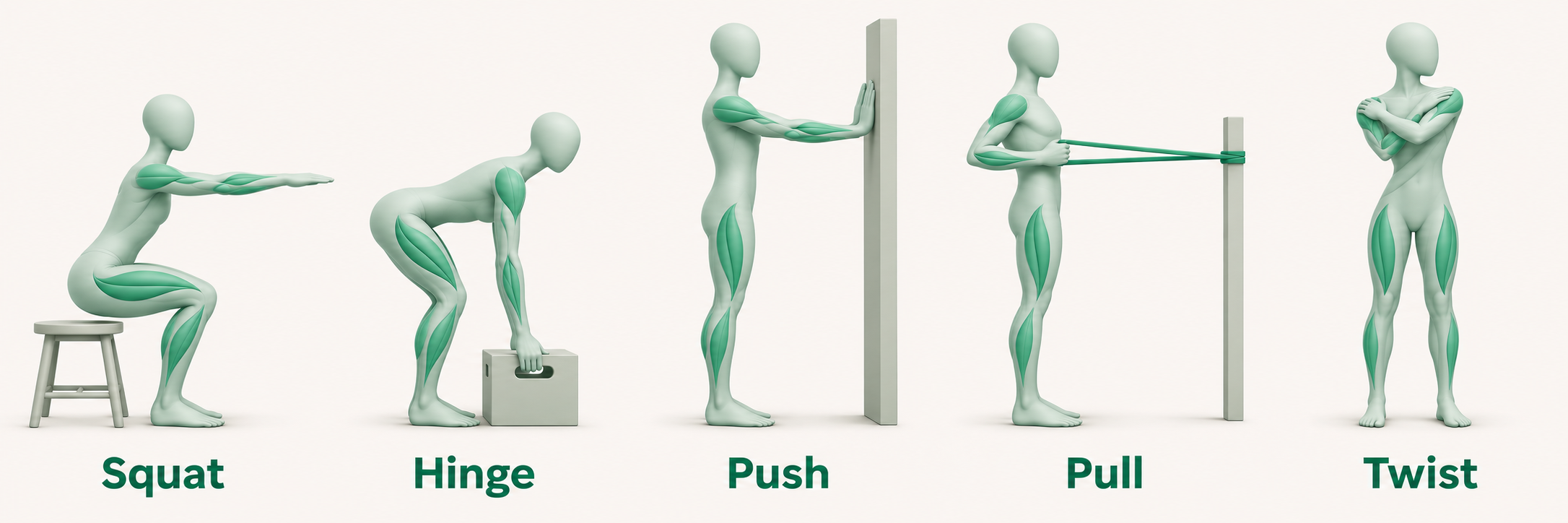
After your body is sufficiently warmed up, you can move onto the 5 basic movement patterns; Squat – sit to stand, Hinge – bending forward to pick something up, Push – closing a hinged door, Pull – opening a hinged door, and Twist – turning to look back while your feet stay where they are. Most exercises of the body are based on these movements. Having proper form in all moves is going to get you results without injury, so don’t overload or be in a hurry. Working one-to-one with a knowledgeable personal trainer will give you the best guarantee of this. Taking a class is also a good way to see the moves done correctly. Having a workout buddy for a second set of eyes or utilizing any available mirrors can be great tools for checking form as well. Whatever approach you decide, it is worth the practice of getting these fundamental moves right.
Start simple and progress gradually
At the beginning, limit the number and complexity of exercises. This will give you the chance to get used to them and the concept of moving more and in different ways than before. Be consistent in observing how your body feels during and after your workouts. There is a difference between muscles being sore because they are/were used and a pain that says you should stop and perhaps alter the movement. When you feel that you have gotten comfortable with a weight and exercise and no longer believe it to be a challenge, it’s time to up the weight, repetitions, or both.
Whether your aim is to compete or continue moving freely in the activities that you enjoy, the world of fitness welcomes you. In the vast expanse of exercise movements there will be something you can do and want to come back to. With each workout session you give to yourself I ask two things of you; find at least one thing that you can truly laugh about and hydrate.